Organic wine
Our organic wine is located in the heart of Beaujolais, offering unspoiled landscapes and a rich terroir for environmentally friendly wines.
The vineyard is over 40 years old and was planted by my father. I began converting to organic farming in 2021 to rediscover the roots of the work as it was done in the past and produce organic grapes whose quality I have complete control over.
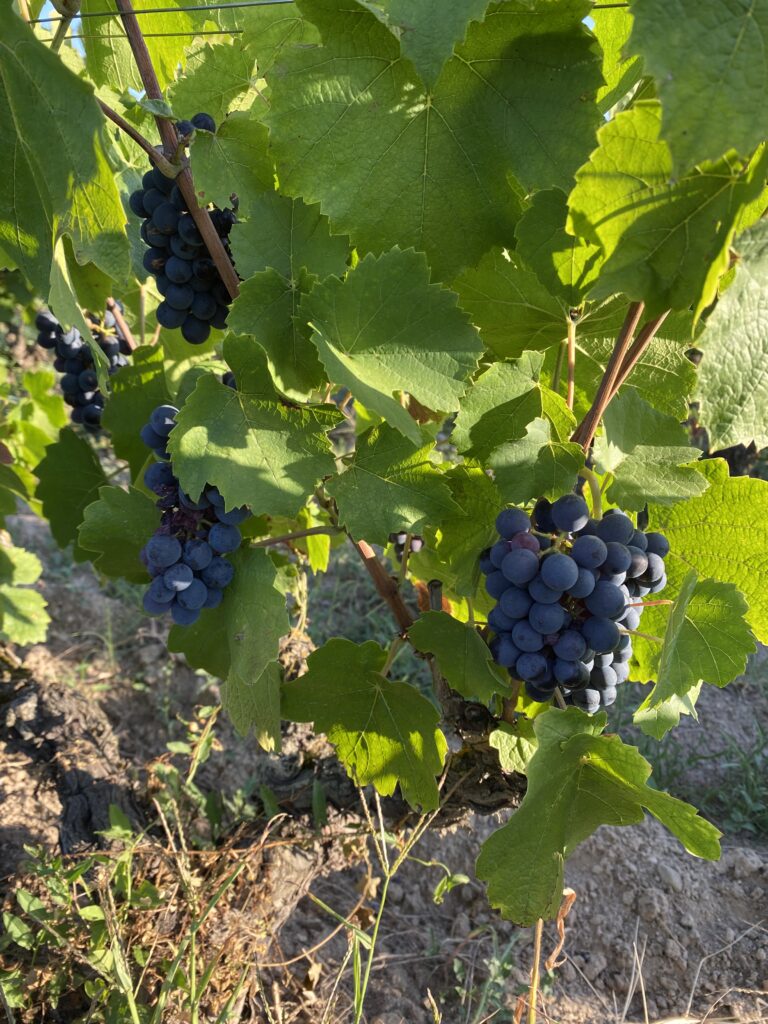
The grape variety is Gamay noir with white juice from a terroir of Piedmont and ancient alluvium.
Pruning
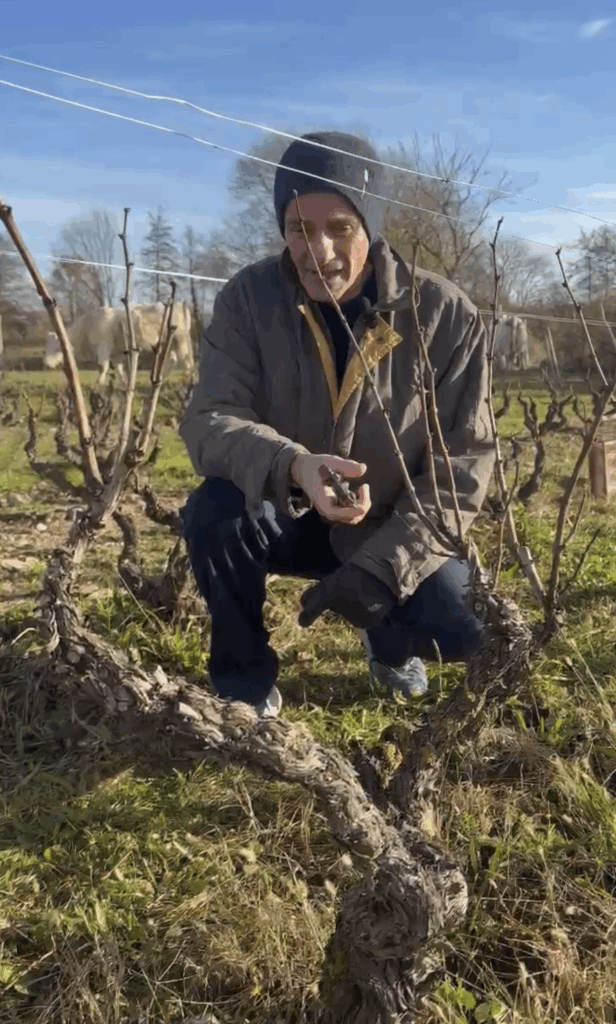
Pruning is a job carried out during the winter. I proceed vine by vine using a “goblet” pruning technique. Specifically, I leave a support with two buds on each horn and take care to clean the remaining antlers along the horn.
At the end of the pruning, I remove the pruning wood and burn it to avoid burying wood disease fungi in the soil.
Plowing
A significant part of the work involves removing the weeds that compete with the vine, hence the necessary plowing.
This work is done regularly throughout the year, in spring, early summer, and winter. In the photo, you can see “Hermes”, the horse, working in the rows.
Trellising and Trimming
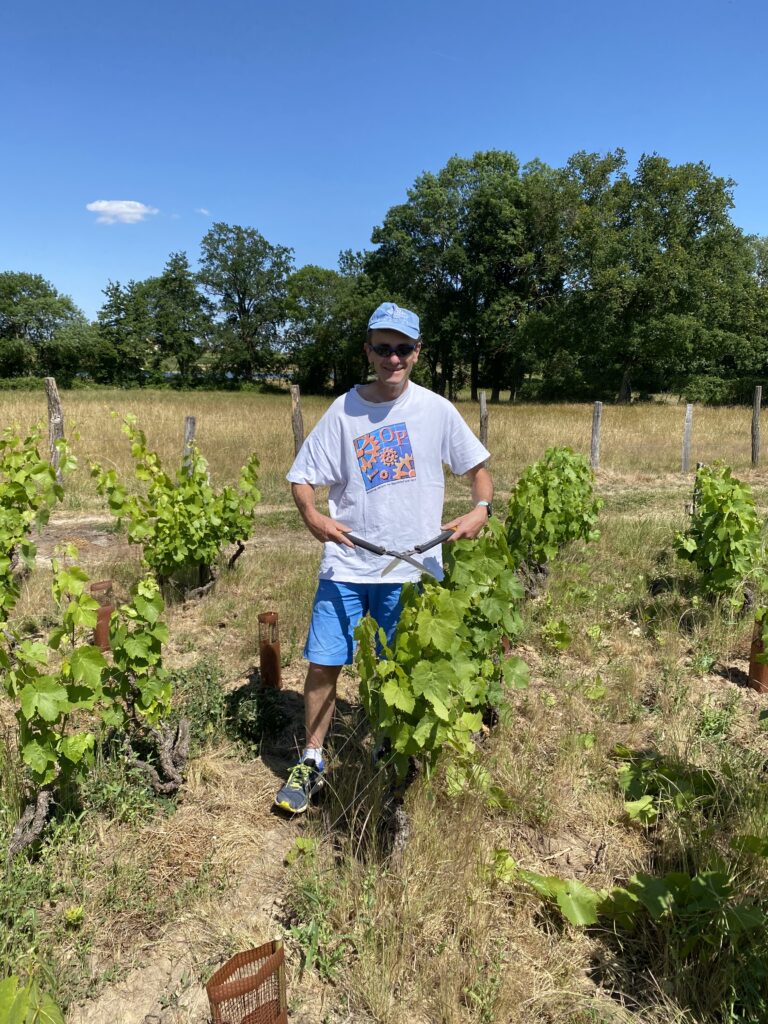
Every year, at the beginning of June, I prune the vines for several reasons. This operation, which can be broken down into two stages: Trellising and Trimming, is crucial for the health of the vines and the future quality of the wine.
Trellising involves raising the vine shoots (the new shoots of the vine) and inserting them between wires. This allows for greater ventilation, better exposure of the grapes to the sun, and easier movement in the rows. In the event of hail, the grapes are also better protected.
Trimming, on the other hand, involves pruning the branches to limit the growth of vegetation. Less vegetation means better air circulation, which reduces the risk of diseases caused by fungi. It is also a way to concentrate the sap on the bunches, which promotes grape ripening.
In short, these two stages are essential to ensure a good harvest and quality grapes.

The Magic of the Harvest: A Family and Epicurean Ritual
Every year, as harvest time approaches, the vineyard becomes the stage for an ancestral ritual, orchestrated with love and precision. Far from the roar of machines, our harvest is a labor of the heart, shared between family and friends, where every cluster is hand-picked. The date is crucial and never chosen lightly; it is whispered in the final days, the result of listening closely to the vines. Three times, I take samples, searching for the fruit’s secrets: the potential alcohol level, the balance of tartaric acid, and the pH—all vital clues to picking the grapes at their absolute peak.
Then comes the big day, a true celebration. From dawn, the good humor and energy of the pickers bring the rows to life, interrupted only by the comfort of a morning snack enjoyed in the fresh air. Lunch, shared among the vines, is a moment suspended in time, where simple flavors mingle with the satisfaction of hard work. As the sun sets and the bins are full, the festivities continue. In the evening, around a generous table, we raise our glasses of fine Beaujolais, our voices joining in song, celebrating the earth and the fruits of our labor in the finest of traditions. It is a day etched in our memories, an unbreakable bond with the vine and the art of living.
From Vine to Cellar
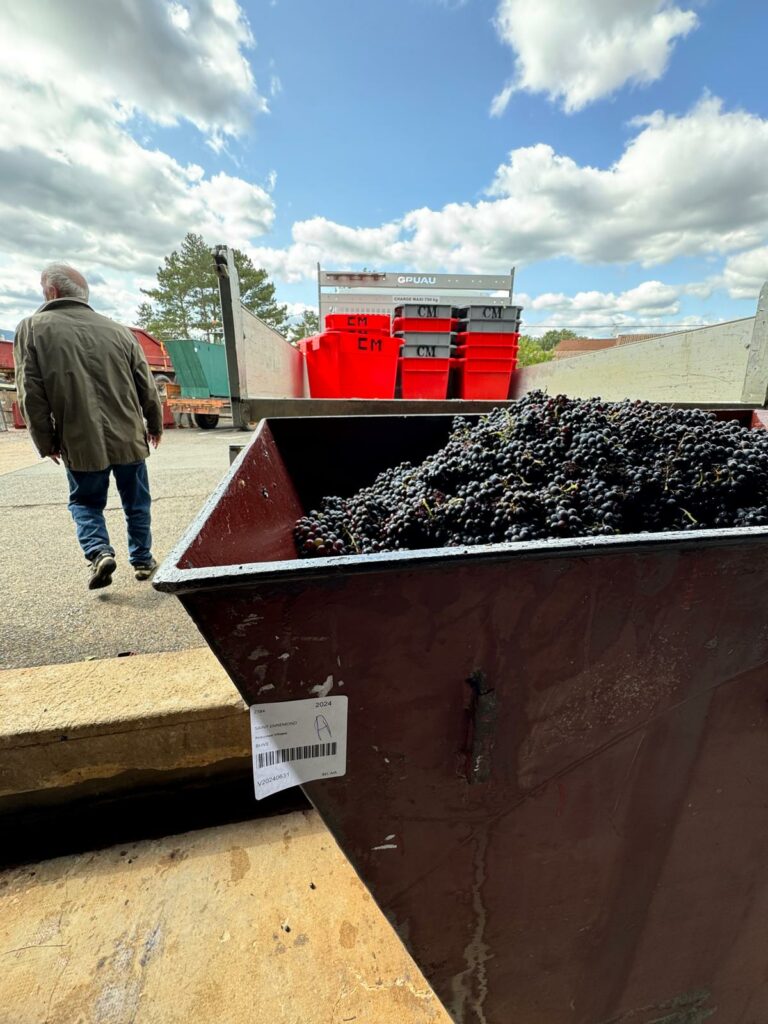
Once the grapes are harvested and crated, they are transported to the Vinescence winery loading docks. The crates are then emptied into a trolley. Each trolley is immediately tracked via barcode to route the grapes to the appropriate vat based on their quality (A being the highest grade here! :=).
As for our grapes, they are certified Organic Beaujolais-Villages and are directed to specific organic vats. I don’t get a vat all to myself—that’s the whole point of the cooperative system.
Fermentation
Then, the fermentation begins slowly, monitored daily by Sébastien, our oenologist and production manager. A sample is taken from each vat every morning and evening and sent to an analytical laboratory to guide our decisions.
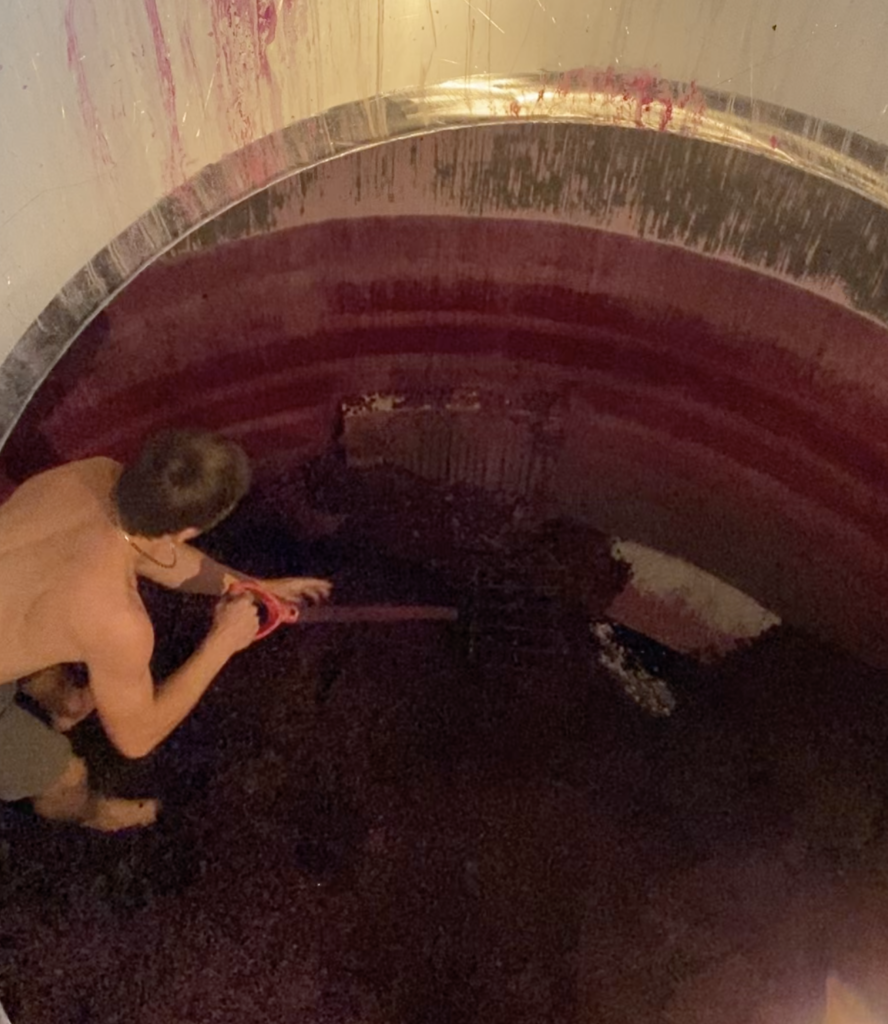
After a few days, when Sébastien decides the time is right, the pressing (pressurage) can begin. The vat is emptied, and the grapes are directed to the press. Emptying a vat is physically demanding work that must be done under close supervision and with strong ventilation to prevent accidents related to carbon dioxide gas.
Once pressed, the wine is returned to vats for a longer period, waiting for the malolactic fermentation to start. At this stage, the work of the oenologist and his team is crucial as they oversee the aging process (l’élevage) of the wine.
Bottling
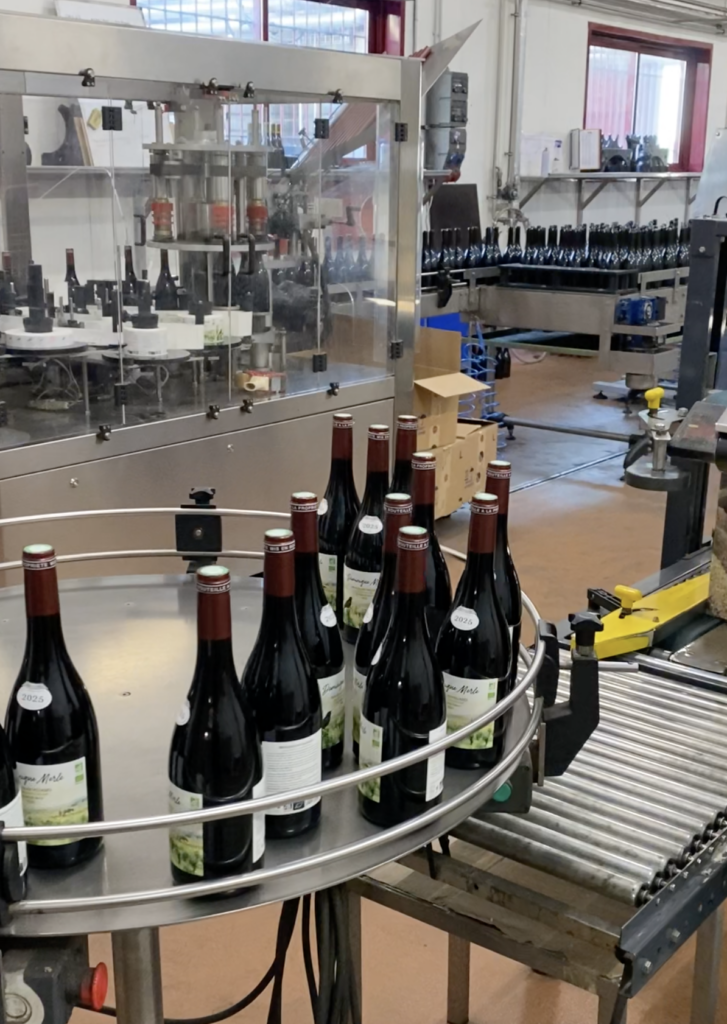
A few months later, once the wines have settled and “passed through Easter,” we move on to the bottling stage.